
Pinterest Traffic Case Study: What Beginners Can Realistically Expect
Introduction
If you’ve spent any time reading about blogging, you’ve probably seen impressive screenshots of Pinterest accounts with hundreds of thousands of monthly views. Naturally, many beginners start asking the same question:
Can Pinterest really generate traffic for a new blog?
The answer is yes—but probably not as quickly as social media success stories might suggest.
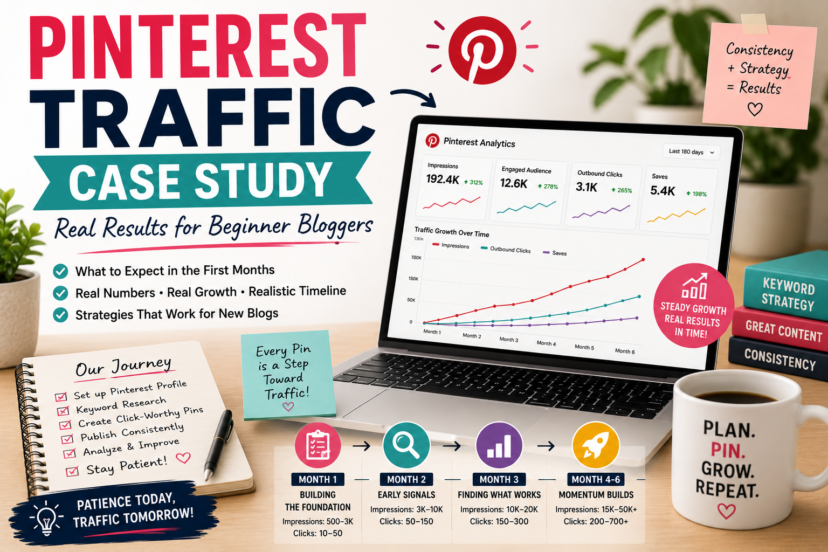
This Pinterest traffic case study takes a realistic look at how Pinterest growth usually happens. Instead of focusing on overnight success, we’ll examine what beginners can expect during their first months on the platform, which strategies tend to work best, and which mistakes often slow down progress.
Most importantly, you’ll learn why patience, consistency, and a solid content strategy matter far more than viral pins.
Why Beginners Need Realistic Expectations
One of the biggest problems in the blogging world is unrealistic expectations.
Many creators discover Pinterest through YouTube videos, blog posts, or online courses promising explosive growth. As a result, they expect thousands of visitors after publishing their first few pins.
Unfortunately, reality is often different.
Most Pinterest accounts go through several stages:
- creating the first pins
- learning keyword research
- understanding analytics
- testing different designs
- publishing consistently
- gradually building momentum
Because Pinterest behaves more like a search engine than a traditional social network, results rarely appear overnight.
If you’re still learning how the platform works, read How Pinterest Works in 2026. The article explains why Pinterest functions differently from Instagram, Facebook, and TikTok.
Our Example: A New Blog Starting From Zero
For this case study, let’s imagine a beginner blogger launching a new website in the side hustle and blogging niche.
At the beginning, the blog has:
- no followers
- no email subscribers
- no Google traffic
- ten published articles
- a brand-new Pinterest account
The creator decides to invest a few hours each week into Pinterest marketing.
Their strategy includes:
- publishing one new article per week
- creating several pins for each article
- researching keywords
- analyzing results
- staying consistent
Although every website develops differently, this example reflects the experience of many beginner bloggers.
Month One: Building the Foundation
The first month is often the most frustrating.
After spending hours creating pins and optimizing boards, beginners typically expect immediate traffic. However, Pinterest still knows very little about the account.
During this stage, Pinterest tries to understand:
- the website’s niche
- the target audience
- relevant keywords
- content quality
- user behavior
Typical results after the first month might look like this:
| Metric | Example Result |
|---|---|
| Monthly impressions | 500–3,000 |
| Outbound clicks | 10–50 |
| Saves | 5–20 |
| Published pins | 20–40 |
For many beginners, these numbers feel disappointing.
However, the most important goal during month one is not traffic.
Instead, the goal is to build systems and habits that can generate results later.
Month Two: Early Signals
By the second month, some pins may start receiving more impressions.
Not every pin performs equally well.
In fact, beginners often notice surprising results:
- simple designs outperform complex graphics
- certain topics attract more clicks
- list-based headlines work better
- some pins receive no engagement at all
At this point, Pinterest begins testing content with larger audiences.
Traffic is still relatively small, but positive signs become visible.
A typical account may now reach:
| Metric | Example Result |
|---|---|
| Monthly impressions | 3,000–10,000 |
| Outbound clicks | 50–150 |
| Saves | 20–60 |
| Published pins | 50–70 |
The key lesson here is simple: consistency matters.
Many beginners underestimate how important consistency really is. In How Many Pins Should You Create?, you’ll learn how to build a realistic publishing schedule.
Month Three: Discovering What Works
By month three, patterns usually begin to emerge.
The blogger can finally answer important questions:
- Which topics attract the most attention?
- Which headlines generate clicks?
- Which pin designs perform best?
- Which keywords bring traffic?
This stage is crucial because data starts replacing guesswork.
Instead of creating random content, the blogger can now make decisions based on actual results.
For example, they may discover that articles about:
- affiliate marketing
- Pinterest SEO
- blogging tips
- online income
perform significantly better than other topics.
At the same time, Pinterest Analytics becomes increasingly valuable.
If you’re unsure how to interpret your numbers, read Pinterest Analytics Explained, where we break down impressions, clicks, saves, and engagement.
Month Four to Six: Momentum Builds
Many bloggers consider months four through six the turning point.
At this stage, several positive developments happen simultaneously.
First, the website contains more content.
Second, Pinterest understands the account much better.
Third, some older pins begin gaining traction.
As a result, traffic often accelerates.
Typical results may now look like this:
| Metric | Example Result |
|---|---|
| Monthly impressions | 15,000–50,000 |
| Outbound clicks | 200–700 |
| Saves | 100–300 |
| Published pins | 100–150 |
Of course, these numbers vary widely.
Some creators grow faster.
Others need more time.
However, one thing becomes clear: Pinterest rewards creators who keep publishing even when results initially seem slow.
The Most Successful Pins Often Aren’t the Most Beautiful
Beginners frequently assume that beautiful graphics guarantee success.
In reality, Pinterest users care more about value than design perfection.
Many high-performing pins share common characteristics:
- clear headlines
- readable text
- strong keywords
- simple layouts
- obvious benefits
For example, a pin titled:
“10 Side Hustles You Can Start This Weekend”
will often outperform:
“My Thoughts on Making Extra Money.”
The lesson is simple.
Good design matters, but clarity matters even more.
If you want to improve your designs, our guide How to Create Click-Worthy Pins explains which elements encourage users to click.
The Role of Keywords in Pinterest Growth
No Pinterest case study would be complete without discussing keywords.
Pinterest relies heavily on keywords to understand:
- your content
- your audience
- your niche
- user intent
Without proper keyword optimization, even great pins may struggle to gain visibility.
Successful creators include keywords in:
- board names
- pin titles
- descriptions
- blog posts
- profile text
Over time, this helps Pinterest recommend content to the right people.
To learn how to find effective search terms, read Pinterest Keyword Research, where we explain the process step by step.
The Biggest Obstacles Beginners Face
Most Pinterest accounts don’t fail because the platform doesn’t work.
Instead, they fail because creators quit too early.
Common problems include:
- expecting instant success
- posting inconsistently
- ignoring analytics
- creating weak headlines
- neglecting keyword research
- comparing themselves to others
These mistakes can significantly delay growth.
Fortunately, all of them can be avoided.
Our article Common Pinterest Mistakes covers the most frequent beginner errors and shows you how to avoid them.
Comparing Pinterest Traffic to Google Traffic
At some point, most bloggers begin comparing Pinterest with Google.
Pinterest often delivers earlier traffic because pins can appear in search results relatively quickly.
Google, however, tends to produce more stable long-term traffic.
Consider this simplified example:
| Platform | First Results | Long-Term Stability |
|---|---|---|
| Often within weeks or months | Moderate | |
| Usually several months | High |
This is why many experienced bloggers combine both strategies.
Pinterest generates momentum early on, while Google SEO builds a strong foundation for the future.
If you want a detailed comparison, read Pinterest vs Google Traffic, where we analyze the strengths and weaknesses of both platforms.
What This Case Study Teaches Us
This Pinterest traffic case study highlights several important lessons.
First, Pinterest growth takes time.
Second, consistency matters more than intensity.
Third, analytics provide valuable insights.
And finally, patience often separates successful creators from those who give up.
Many beginners expect a straight line from zero to thousands of visitors.
Reality looks different.
Pinterest growth usually happens in waves:
- slow beginnings
- small improvements
- unexpected breakthroughs
- temporary setbacks
- gradual momentum
Understanding this process makes it much easier to stay motivated.
How to Speed Up Your Results
Although there is no shortcut to success, certain habits can improve your chances of growth.
Focus on the following:
- publish helpful blog posts
- create multiple pins per article
- research keywords carefully
- track analytics regularly
- improve older pins
- stay consistent
At the same time, avoid obsessively checking your statistics every day.
Pinterest is a marathon, not a sprint.
Small improvements repeated over many months often produce impressive results.
Should Beginners Still Invest Time in Pinterest?
For many bloggers, the answer is yes.
Pinterest offers several advantages:
- long-lasting content
- free traffic potential
- beginner-friendly tools
- strong performance in many niches
- opportunities to grow an email list
However, Pinterest is not magic.
Success still depends on:
- quality content
- smart strategy
- patience
- consistency
Bloggers who understand this usually have a much better experience.
Want to learn more about Pinterest marketing? Visit our Pinterest Hub, where you’ll find beginner-friendly guides on keyword research, pin design, analytics, and sustainable traffic strategies.
Final Thoughts
This Pinterest traffic case study demonstrates an important truth: meaningful growth rarely happens overnight.
Most successful creators spend months learning, experimenting, and improving before they see significant traffic.
Fortunately, that slow progress is completely normal.
Pinterest rewards people who publish consistently, optimize their content, and focus on long-term goals rather than quick wins.
If you approach Pinterest with realistic expectations, it can become one of the most valuable traffic sources for your blog.
Remember: every successful Pinterest account once started with zero impressions, zero clicks, and zero followers.
FAQ
1. How long does it take to get traffic from Pinterest?
Most beginners need several weeks or months before they see meaningful traffic.
2. Can a new blog grow with Pinterest?
Yes. Many new blogs use Pinterest to attract visitors while waiting for Google rankings to improve.
3. How many pins should beginners create?
Quality matters more than quantity. Consistent pinning is usually more important than publishing large numbers of pins.
4. Why are my Pinterest impressions low?
Common reasons include weak keywords, inconsistent posting, poor design, or simply not giving Pinterest enough time.
5. Is Pinterest traffic better than Google traffic?
Both traffic sources have advantages. Pinterest often delivers results faster, while Google tends to provide more stable long-term traffic.


