
How to Plan Blog Content (Even If You’re Starting From Scratch)
Introduction
Learning how to plan blog content is one of the most important skills every new blogger can develop. Many beginners believe blogging simply means writing whenever inspiration strikes. Unfortunately, that often leads to inconsistent publishing, writer’s block, and slow growth.
A simple content plan helps you stay organized, publish consistently, and create articles that work together instead of competing with one another. Even if you’re starting from scratch, you don’t need dozens of ideas—you only need a clear structure.
In this guide, you’ll learn how to plan blog content that keeps readers engaged while steadily building long-term organic traffic.
Why Content Planning Matters
Successful blogs aren’t built on random articles. Instead, they are built around topics that solve specific problems for a defined audience.
Planning your content helps you:
- Publish consistently
- Stay focused on your niche
- Improve internal linking
- Build topical authority
- Reduce writer’s block
- Save time every week
Most importantly, a content plan turns your blog into a resource instead of a collection of unrelated articles.
Step 1: Understand Your Audience
Before writing your first article, ask yourself:
- Who am I helping?
- What problems do they have?
- What questions do they ask?
- What goals are they trying to achieve?
For example, if your audience wants to build a side income, they may ask:
- Which side hustle should I choose?
- How do I start blogging?
- What is affiliate marketing?
- How do I get website visitors?
- How can I earn my first commissions?
Each question can become a future article.
If you’re still building the foundation of your online business, our Beginner Side Hustles learning path introduces the essential concepts every beginner should understand before creating a long-term content strategy.
Step 2: Organize Content Into Topic Clusters
Instead of publishing random posts, group your articles into related categories.
For example:
Beginner Side Hustles
- How to Start a Side Hustle
- First €500 Online
- Common Beginner Mistakes
Blogging
- Choose a Blog Niche
- Plan Blog Content
- Write Better Articles
- SEO Basics
Affiliate Marketing
- What Is Affiliate Marketing?
- Find Affiliate Programs
- Write Affiliate Content
- Affiliate Commissions
This structure helps readers navigate your website while improving SEO.
Before planning your content calendar, make sure you’ve selected a niche that offers long-term growth opportunities. Our guide How to Choose a Blog Niche explains how to find a profitable topic that matches both your interests and your audience’s needs.
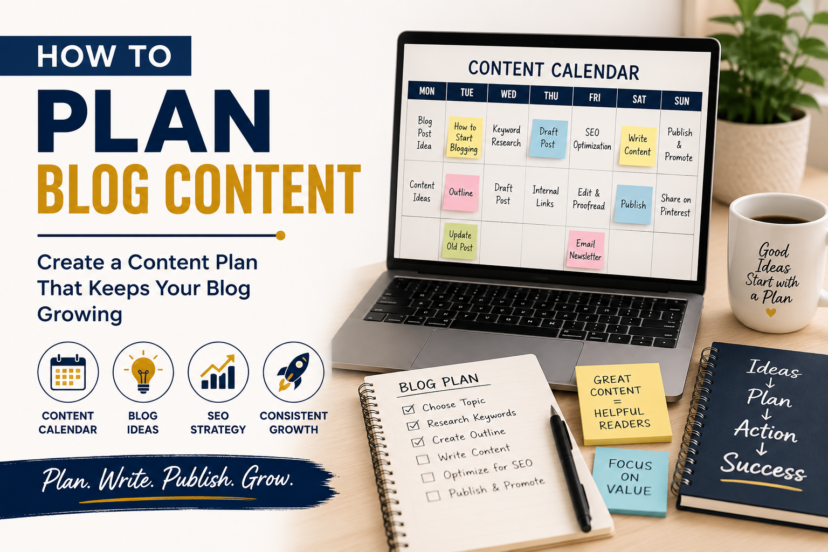
Step 3: Create a Simple Content Calendar
You don’t need expensive software.
A spreadsheet or notebook is enough.
Plan:
- Article title
- Main keyword
- Publishing date
- Pinterest pin
- Internal links
- Status
Example:
| Week | Article |
|---|---|
| 1 | Choose a Blog Niche |
| 2 | Plan Blog Content |
| 3 | Write Your First Blog Post |
| 4 | Basic On-Page SEO |
Consistency is far more important than speed. You don’t need to publish dozens of articles as quickly as possible to build a successful blog. If you’re wondering what a realistic content target looks like, How Many Articles Do You Need? explains why there is no magic number and what matters more than simply publishing as much as possible.
Step 4: Balance Evergreen and Supporting Content
Evergreen content stays useful for years.
Examples:
- How to Start Blogging
- Affiliate Marketing Basics
- SEO for Beginners
Supporting articles answer smaller questions and strengthen your main content.
Together, they create a complete learning path.
Planning your articles is only part of the process. You also need to create content that provides genuine value. In Content Marketing for Beginners, you’ll learn how to write helpful articles that build trust and attract consistent organic traffic.
Step 5: Always Think One Article Ahead
One of the easiest ways to avoid writer’s block is planning your next article before publishing the current one.
Keep a list of future topics and update it whenever new ideas come to mind.
This habit makes blogging much less stressful.
Once your content plan is in place, the next goal is attracting readers. Our guide How to Get Your First 100 Website Visitors shares practical strategies for generating traffic through SEO, Pinterest, and consistent publishing.
Common Content Planning Mistakes
Avoid these common mistakes:
- Publishing without a plan
- Chasing every trend
- Writing unrelated articles
- Ignoring internal links
- Publishing inconsistently
- Forgetting keyword research
Simple planning prevents all of these problems.
Want to become a better blogger step by step? Explore our complete Blogging learning hub, where you’ll find practical guides covering niche selection, content planning, SEO, traffic generation, and writing high-quality blog posts.
Final Thoughts
Content planning doesn’t have to be complicated. A clear roadmap helps you stay focused, create valuable articles, and steadily grow your website over time.
Start with a small list of ideas, publish consistently, and improve your plan as your blog grows. Every successful blog began with a single well-planned article.
FAQ
1. How far ahead should I plan my blog content?
Planning one to three months ahead is enough for most beginner bloggers. It gives you direction while leaving room for new ideas.
2. Do I need a content calendar?
A content calendar isn’t required, but it helps you publish consistently and avoid running out of ideas.
3. Should every article target a keyword?
Yes. Each article should focus on one primary keyword while naturally including related terms throughout the content.
4. How many blog posts should I publish each month?
Quality matters more than quantity. Publishing one well-written article each week is a realistic goal for most beginners.
5. What’s the difference between random articles and topic clusters?
Random articles cover unrelated subjects. Topic clusters group connected articles around one main topic, making your website easier to navigate and improving SEO.


