The Perfect Welcome Email Sequence
Introduction
Imagine this: someone visits your blog, downloads your free lead magnet, and joins your email list.
What happens next?
For many beginners, the answer is… nothing.
The subscriber receives the download, and then silence.
Unfortunately, that’s a missed opportunity.
The first few days after someone joins your email list are incredibly important. Your new subscriber is interested, curious, and willing to learn more about you. This is exactly the right moment to introduce yourself, provide value, and begin building trust.
That’s where a welcome email sequence comes in.
Instead of sending a single confirmation email, a welcome sequence automatically delivers a series of helpful emails over several days. Each email has a clear purpose and gently guides new subscribers toward becoming loyal readers—and eventually, customers.
In this guide, you’ll learn why every side hustle needs a welcome sequence, how many emails beginners should send, and what each email should include.
What Is a Welcome Email Sequence?
A welcome email sequence is a series of automated emails that new subscribers receive immediately after joining your email list.
Unlike a newsletter, which is sent to everyone at the same time, a welcome sequence starts individually for each new subscriber.
For example:
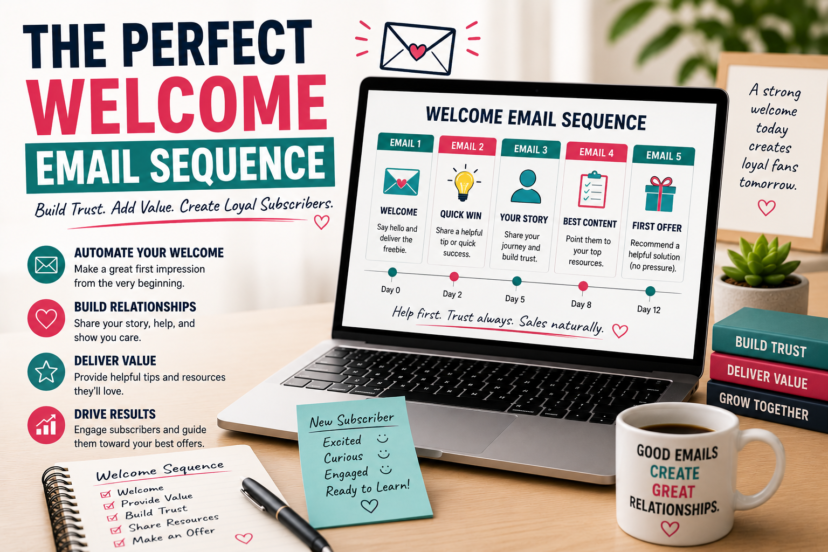
- Day 0: Welcome email
- Day 2: Helpful tips
- Day 5: Your story
- Day 8: Useful resources
- Day 12: First recommendation
Every subscriber receives the same sequence, regardless of when they sign up.
This automation allows you to welcome every new reader professionally without manually sending emails.
Why First Impressions Matter
Think about meeting someone for the first time.
You probably wouldn’t begin by asking them to buy something.
Instead, you’d introduce yourself, start a conversation, and build trust.
Email marketing works exactly the same way.
Many beginners make the mistake of sending promotional emails immediately after someone subscribes.
However, people usually join your list because they want help—not sales pitches.
A thoughtful welcome sequence shows that you’re here to solve problems, answer questions, and provide value.
As a result, subscribers are much more likely to stay engaged.
If you’re still wondering why building an email list matters in the first place, read Why Every Side Hustle Needs an Email List. It explains why your subscriber list can become one of the most valuable assets in your online business.
Sales are not the Goal
Many people assume the purpose of email marketing is selling products.
In reality, selling is only one small part of the process.
The real objective is to build relationships.
A strong welcome sequence helps subscribers:
- get to know you
- trust your advice
- understand your mission
- discover your best content
- stay engaged
Sales often happen naturally after trust has been established.
This approach feels much more authentic for both you and your readers.
Email 1: Welcome and Deliver the Promise
Your first email is the most important one.
Subscribers expect it immediately after signing up.
This email should:
- welcome the subscriber
- deliver the promised freebie
- explain what they’ll receive in future emails
- thank them for joining
Keep it friendly and personal.
Example:
“Welcome! I’m so glad you’re here. Below you’ll find your free guide. Over the next couple of weeks, I’ll also share practical tips to help you build a realistic side income without quitting your full-time job.”
Notice that there is no pressure.
Instead, the email simply starts the relationship.
Email 2: Share Quick Wins
A few days later, send your second email.
This email should provide immediate value.
For example:
- one practical tip
- one useful resource
- one common mistake to avoid
- one helpful checklist
The goal is simple.
Help your subscriber experience a small success.
When people see results, they naturally become more interested in your future emails.
Email 3: Tell Your Story
People connect with people.
They don’t connect with anonymous websites.
Your third email is a great opportunity to introduce yourself.
You don’t need an extraordinary success story.
Instead, explain:
- why you started
- what challenges you faced
- what you’ve learned
- why you created your website
Being honest often builds more trust than trying to appear perfect.
Many beginners appreciate learning from someone who remembers what it feels like to start from zero.
Email 4: Highlight Your Best Content
By now, subscribers know who you are.
Next, help them discover your most useful articles.
Instead of sending ten different links, recommend three or four carefully selected resources.
For example:
- a beginner guide
- a step-by-step tutorial
- a popular article
- a useful checklist
This helps new readers quickly understand the value your website provides.
If your visitors first discovered you through Pinterest, direct them to your Pinterest Hub. There they’ll find beginner-friendly articles covering Pinterest SEO, keyword research, pin design, analytics, and traffic strategies.
Email 5: Your First Recommendation
Only after you’ve delivered consistent value should you think about making a recommendation.
This doesn’t have to be a sales email.
Instead, you might recommend:
- a helpful book
- a blogging tool
- your favorite email platform
- an affiliate product you genuinely use
Explain why you recommend it.
Honest recommendations perform much better than aggressive sales messages.
How Long Should the Sequence Be?
One of the most common beginner questions is:
“How many emails should I send?”
Fortunately, the answer is simple.
For most beginners, five emails are more than enough.
Later, you can always expand the sequence.
A realistic schedule might look like this:
| Day | |
|---|---|
| 0 | Welcome & free download |
| 2 | Quick win |
| 5 | Your story |
| 8 | Best resources |
| 12 | Helpful recommendation |
This gives subscribers enough time to get to know you without feeling overwhelmed.
Should Every Email Be Long?
Definitely not.
Many beginners think longer emails are automatically better.
In reality, shorter emails often perform extremely well.
Aim for:
- one topic
- one clear message
- one simple action
People are busy.
A concise, helpful email is usually more effective than a lengthy lecture.
Keep the Focus on Helping
Before sending any email, ask yourself one question:
“Does this help my subscriber?”
If the answer is yes, you’re probably moving in the right direction.
Helpful emails may include:
- practical advice
- useful resources
- encouragement
- tutorials
- personal experiences
Subscribers remember people who consistently help them.
Common Welcome Sequence Mistakes
Even experienced creators make mistakes.
Fortunately, most are easy to avoid.
Common problems include:
- sending only sales emails
- waiting too long between emails
- writing overly long messages
- overwhelming subscribers with too many links
- forgetting to introduce yourself
Instead, focus on simplicity.
One idea.
One message.
One next step.
Automation Saves Time
One of the greatest advantages of a welcome sequence is that you only create it once.
Afterward, every new subscriber automatically receives the same high-quality experience.
While you’re writing new blog posts or creating Pinterest pins, your welcome sequence continues working in the background.
That’s one reason email marketing scales so well.
Pinterest is an excellent source of new subscribers. In Pinterest Traffic Case Study, you’ll see how growing traffic and email marketing work together to build a sustainable online business.
Measuring Success
How do you know whether your welcome sequence is working?
Pay attention to metrics such as:
- open rate
- click rate
- replies
- unsubscribe rate
Don’t worry about perfection.
Instead, look for gradual improvement.
For example:
- rewrite weak subject lines
- simplify confusing emails
- improve your calls to action
Small improvements often produce significant long-term results.
Your Welcome Sequence Will Evolve
Your first sequence doesn’t need to be perfect.
In fact, almost every successful email marketer updates their sequence regularly.
As your business grows, you’ll learn:
- which emails perform best
- which links receive clicks
- which topics subscribers enjoy
Use this information to improve your sequence over time.
Progress matters far more than perfection.
Want to learn more about growing your audience? Visit our Email Marketing Hub, where you’ll find practical guides on lead magnets, email writing, subscriber growth, automation, and monetization.
Final Thoughts
Your welcome email sequence is much more than a series of automated messages.
It’s your opportunity to make an excellent first impression, build trust, and show new subscribers that they made the right decision by joining your email list.
Rather than focusing on selling immediately, concentrate on helping your audience succeed.
When subscribers consistently receive useful advice, they naturally become more engaged, more loyal, and more likely to trust your future recommendations.
Remember: every lasting online business is built on relationships—and your welcome sequence is where many of those relationships begin.
FAQ
1. What is a welcome email sequence?
A welcome email sequence is a series of automated emails sent to new subscribers after they join your email list.
2. How many welcome emails should beginners send?
Five emails are an excellent starting point for most beginners.
3. Should I sell something in my first email?
No. Your first email should focus on welcoming subscribers and delivering the promised free resource.
4. How long should a welcome sequence last?
Many beginner-friendly welcome sequences run for about one to two weeks.
5. Can I change my welcome sequence later?
Absolutely. Most successful email marketers regularly improve their sequences based on subscriber feedback and performance data.


