
How to Write Blog Posts Faster (Without Sacrificing Quality)
Introduction
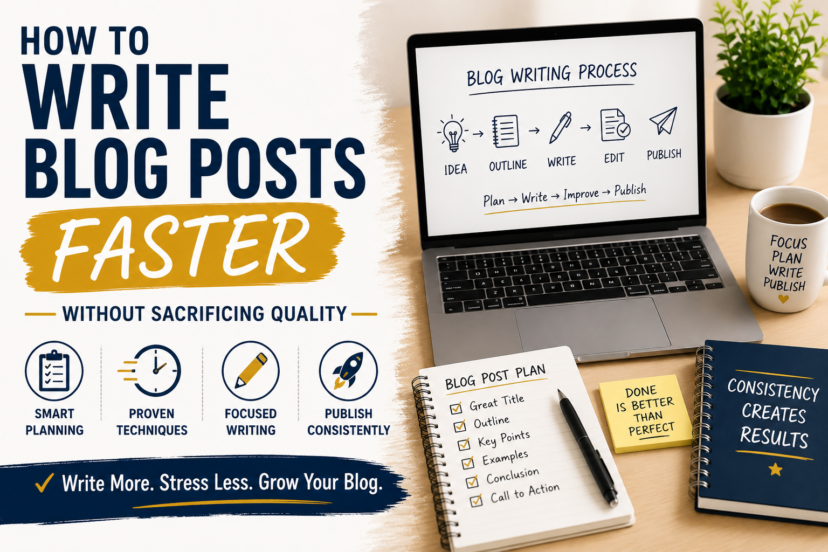
Learning how to write blog posts faster is one of the biggest challenges for new bloggers. Many beginners spend days writing a single article because they constantly edit, rewrite, and second-guess every sentence.
Fortunately, writing becomes much easier once you follow a simple process. Instead of trying to create the perfect article in one sitting, you’ll learn how to break the work into manageable steps.
In this guide, you’ll discover practical techniques that help you write blog posts faster while maintaining quality and providing value for your readers.
Why Most Beginners Write Too Slowly
Many new bloggers believe they need perfect wording before moving to the next paragraph.
However, perfection is one of the biggest productivity killers.
Common reasons include:
- Editing while writing
- Not having an outline
- Constantly checking grammar
- Researching every sentence
- Getting distracted
Instead of focusing on perfection, focus on finishing your first draft.
Step 1: Create an Outline First
Before writing a single paragraph, create a simple structure.
For example:
- Introduction
- Main sections
- Examples
- FAQ
- Conclusion
An outline acts like a roadmap.
Instead of wondering what to write next, you simply fill in each section.
Before creating your outline, it’s helpful to have a clear content strategy. Our guide How to Plan Blog Content explains how to organize your ideas into topic clusters and build a publishing schedule that supports long-term growth.
Step 2: Write Without Editing
One of the most effective ways to speed up your writing is separating writing from editing.
First, write everything that comes to mind.
Then, improve it later.
Trying to do both at the same time slows you down considerably.
Remember:
Finished is better than perfect.
Step 3: Use Templates
Successful bloggers rarely start from a blank page.
Instead, they use the same structure repeatedly.
For example:
- Introduction
- Why it matters
- Step-by-step guide
- Common mistakes
- FAQ
- Final thoughts
Templates save time while creating a consistent experience for your readers.
Of course, every successful blog starts with the right foundation. If you haven’t chosen your topic yet, read How to Choose a Blog Niche to learn how to select a niche that offers long-term opportunities and plenty of content ideas.
Step 4: Limit Your Research Time
Research is important.
However, endless research often becomes procrastination.
Set yourself a time limit.
For example:
30–45 minutes.
Then start writing.
You can always verify additional details later.
Step 5: Remove Distractions
Writing requires concentration.
Before you begin:
- Close unnecessary browser tabs.
- Turn off notifications.
- Put your phone away.
- Work in focused sessions of 30–60 minutes.
Even one uninterrupted hour can dramatically improve your productivity.
Step 6: Use AI as a Writing Assistant
Artificial intelligence can help you:
- generate ideas
- improve headlines
- suggest outlines
- rewrite awkward sentences
- check grammar
However, AI should support your writing—not replace your experience or your voice.
Readers value authenticity.
Writing great articles is only part of the process. To attract readers, your content also needs to provide genuine value. In Content Marketing for Beginners, you’ll learn how to create helpful content that builds trust and encourages visitors to return.
Step 7: Publish Consistently
Writing faster isn’t about rushing.
It’s about building habits.
Publishing one helpful article every week is much better than writing one perfect article every three months.
Consistency wins over perfection.
Once you’re publishing regularly, your next goal is attracting readers. Our guide How to Get Your First 100 Website Visitors shares practical strategies for growing your traffic through SEO, Pinterest, and consistent content creation.
Common Mistakes
Avoid these mistakes:
- Writing without an outline
- Editing every sentence immediately
- Researching forever
- Trying to sound perfect
- Waiting for inspiration
- Publishing inconsistently
If you’re following our complete Blogging learning path, continue exploring the Blogging Hub for more beginner-friendly guides covering SEO, keyword research, internal linking, and long-term website growth.
Final Thoughts
Writing blog posts faster is a skill that improves with practice.
The more you write, the easier the process becomes.
Focus on helping your readers instead of creating perfection.
Over time, you’ll develop your own writing rhythm, publish more consistently, and steadily grow your website.
FAQ
1. How long should it take to write a blog post?
For beginners, a high-quality article often takes between three and six hours. With experience and a clear workflow, many bloggers reduce this significantly.
2. Should I edit while writing?
No. It’s usually faster to complete your first draft before making edits.
3. Can AI help me write faster?
Yes. AI can assist with outlines, brainstorming, grammar, and rewriting. However, your personal experience and unique perspective should remain the foundation of every article.
4. How often should I publish new blog posts?
One high-quality article each week is a realistic and effective goal for most beginner bloggers.
5. Is quality more important than speed?
Absolutely. Writing faster is valuable only if your articles continue to provide useful, accurate, and trustworthy information.